I think that one thing that speculative fiction, hard sci-fi, and even fiction as a whole does for us is that it gives us a platform to text new ideas. New technology, and more importantly to encourage and inspire those in the position to actually make it become reality. One thing that has always intregged me is the notion of effortless travel.
Something that may to some seem outlandish is actually feasible. It also has the potential to completely change humanity. While it may not be propelling you next SUV, it is something that, given enough time human kind has the ability to achieve.
Another technology that is often reviewed in speculative works is full immersion virtual reality. The idea is attractive to authors because they have the opportunity to remake physics, creating a place where technology as well as magic is achievable.
There is simply no reason to question our ability to become an interstellar species ready and capable to take to the stars. The advent of antimatter propulsion, which should become attainable in the next two hundred years or less will enable us to reach .1 to.3 c. Something like that has the potential to send viable generation ships to nearby systems, which would in turn be able to gone one step further. At this point, an interstellar federation is not only possible, but it has already begun.
The idea that after a couple of generations of colonization, those first colonist can send a new generation ship isn't new in sci-fi. Colonizing nearby stars is a common theme among sci-fi authors and it is one that even just a hundred years ago seemed like the wildest form of speculation, yet today, many different organizations around the world are actively working to bring us there. It is such common knowledge/understanding that we don't even think twice about it.
Another theme that is common among authors is the possible option of trans-humanism. What it deals with is the ability to multiply human life expectancy by factors of 100s or 1000s. Life expectancy is only going to keep increasing, and when once, forty was considered old, today it is simply the start of middle age.
Is any of this feasible?
Sure.
Just look at the technology that sounded so alien from the last decades.
The military is one area that is always pushing the boundaries when it comes to applying the hypothetical to current technology.
Take for example the old Tomahawk cruise missiles, once it topped all of the list for high-tech weaponry. Yet, to today's standards it was rather primitive. Coming pre-loaded with maps of the terrain, they rockets were supposed to follow and using sensors to scan and match the terrain.
Many of the "improvements" are simply a bit of the old with a bit of the new. Take for instances GPS guided bombs. They are nothing more than the old dumb bombs with basic GPS guidance system and fins connected to them.
The laser guided bombs/missiles required laser spotters to be located on the ground or built into the aircraft to function. While the missiles were constructed to utilize a more advanced laser targeting system, the "smart" bombs were just dumb bombs with the laser hardware attached to them and functioned on the same principle as the GPS guidance systems.
Yet no matter how basic they are, modern threats have been addressed with an additional layer of technology that was not required when they were conceived.
EMP weapons are products of early 80's fiction, yet whatever threat they posed them, it has largely been mitigated by redundancy and mass production.
And even when you take that into consideration, today's smart weapons incorporate shielding into their design, with hardware that acts in a manner similar to Faraday cages. This prevents any strong pulse from charging the circuit boards. Yet it is also simply, and rather low tech. They use simple copper alloy that prevent any similar boards from being shorted.
In short, while once considered the weapon of the future, EMPs would have no effect on today's smart weapons, or any produced in the last twenty years. What at one time was speculation was rendered useless by an even more advanced technology.
Speculation leads to reality, which leads to history.
I think that it is safe to say that a lot of fiction is for the most part easy to categorize. And while we are seeing a lot of work lately that you could say, crosses over, and I'm not sure that we would really want to label it "speculative."
For one thing, I think that the term only fits when the author begins the work with that in mind, and only when they are actually speculating in the strictest sense of the word.
As other people have said in the past, and better than myself I should add, it seems to me that trying to define a genre by grouping things together serves only the marketing department at the different publishers. As a reader I don't look for books based on what I think the publisher's marketing thinks the book is. They use it as a tool and more and more like a crutch. Since they have few other options to get their products - and that is exactly what they see the books as - in front of their readers. You can argue about this as much as you like but in the end, the reader is the one that will see in it what they want.
So what is speculative sci-fi? Or even speculative fiction, if only a genre?

Speculative Fiction
For me speculative fiction, and this can be sci-fi but it does not need to be, simply deals with works that ask the question: "What if?"
These are works of fiction that may use another world to hold a mirror up to our own. Almost all speculative fiction could also be described as SF, fantasy, alternate history, etc, but much less SF, fantasy and alternate history could be described as speculative fiction, although there's still a massive overlap. I don't think it's really a hard division either, you could say that it is a little bit like a sliding scale, many authors choose to work in multiple genres and, while they may be lumped together with the other speculative authors they are not in fact always in that category. I would say that this is even true about specific books, for many of them you could argue either way.
I think that this is as good of time as any to mention Terry Pratchett, the beloved author of the Discworld books and many more.
.jpg)
Many consider "Thud!" a work of speculative fiction, more so even that some of his early works like "The Colour of Magic", and I full see where they are coming from. Both books move in very much a manner that is akin to speculative fiction, though neither book has ever been placed under that category.
This isn't a random mistake by the publishers, they knew their audience, and they knew what they wanted. As with any genre, it is simply a category, there are many exceptions as there are adherents to the rule and Terry Pratchett was the brand, so it is no wonder that they left things alone. The publisher didn't need to go looking for potential readers.
I find the whole notion of genre fascinating, mostly because I think that it is a never ending conversation instead of a definitive system of classification, genres are always in flux.
Authors who might typically be labeled genre fiction authors, Atwood comes to mind, have in recent years stepped our of the confines of their own genre and have become more and more highly respected, I think the debate will only get more complex and we will be rewarded as readers with some of the best works.
Genre As A Tool
Genres are largely tools for publishers. And since we have hinted about this in the previous paragraphs I wanted to go into it a little further and maybe shed some more light on how the industry works.
It is obvious that genres are way to categorize works for the book industry and to sell books targeted at a specific, or perceived audience. This also works to categorize potential readers and supply them with authors and books they may or may not be interested in. It strike me as a little odd, and limiting as a reader, but then it seems to work well enough, and I know plenty of people that are very attached to their genre.
But this leaves you with situations where many readers "won't read fantasy" or "only read fantasy," which is why genres are important for the publishers. Though they are limiting and damaging for authors who don't fit nicely into the different boxes.
How does this work? It is easy, your books get sorted into genres based on the preconceived audience that is being targeted. It is more an emotion or superficial look at the work. The categories themselves are inherently blurry and the reason a book gets labeled sci-fi or fantasy, for instance, is nothing more than because it was in fact labeled that way. It is scary to think that a lot of readers are missing perfectly good opportunities to expand their library just because somebody at Random House or any of the other big publishers decided because a book talks about computers/space/alien life in one chapter that it is inherently sci-fi.
Of course the use of genre labels is used outside the organization of bookstores, and many of the different entertainment branches use them. But they use them differently. What I mean is there are no standard definitions of what a genre is and is not.
While it can be a rewarding piece for discussion, understanding the different ways books are and are not related, it is one that is as influenced by publisher bias as it is reader bias. No matter what, people are going to talk past each other in defining their own genres.
Trust me, it happens every time.
If you ever intend in engaging in such a debate, remember how important it is to identify what it is that you are trying to accomplish with the label.

I love speculative sci-fi for so many reasons. My I would highly recommend "Children of Time," and I would do so due to the human aspect of the story.
Not, because the human characters are likable, in fact they are a bit more annoying than anything else and I felt like it was a challenge at times to get through their chapters, even with that, or especially because of that, the book is a pleasure to read. And there is so much going on in the alternate chapters that the book feel very gratifying to read.
At least for me.
Speculative Science Fiction
Speculative and hard science fiction were part of my childhood, and they are still a part of my life to this day. But it isn't for everyone. Still, if you want to give it a try, I have some suggestions for some good hard science fiction.
One that has always appealed to me is "Teranesia" by Gren Egan since its release in 1999.
The thing that appeals to me is the setting and scope. It is set in a modern day and near future story set on Earth. The story focuses on a couple of scientists and their children, who move to a small island where they study a species of butterflies and their evolution.
Although it's hard science fiction, I should warn you that, when compared to other books by Egan, this one is pretty much character driven throughout.
Then there is Dougal Dixon. What can I say? I love Dougal Dixons work!
His books remind me of Olaf Stapledons novels. And if you know Stapledon you will see what I mean, specifically "Last and First Men" and "Star Maker", both of which were written in the 1930's; I'm sure they must have been an inspiration for Dixon.
Speaking of Stapledon, it may interest you to learn that if you live in a country with a lifetime 50 years copyright law his books are now in the public domain and you can get them from Gutenberg.
Vernor Vinge's "Marooned in Realtime" has some of this same sort of charm. Though I think that it takes you a bit to move into the story since it involves "bobbles" which let people jump years or millennia ahead in the future. The main characters are all far enough in the future that there are many different animals which have evolved throughout their journey. It's not a huge part of the story, granted, but it's quite evocative nonetheless.
The Time Ships
Baxter's "The Time Ships" is a mind-bending and very well written book. The book deals with different evolutionary paths of human beings in the far future.
It's an official "sequel" to H. G. Wells' "Time Machine," endorsed by the H. G. Wells foundation. I will say though that you don't have to know anything about Wells "Time Machine" to enjoy Baxter.
One thing that I love about Baxter's work is that he really enjoys exploring human specification; no matter which book you pick up you will find it, with most of the Xeeleeverse books going as far as they can to see how flexible the concept of "human" really is. They are fascinating and definitely worth exploring. His Coalescences are if nothing else neat, offering a sort of twitchy kind of fun.
He wrote another book some time ago which was simply titled: "Evolution." It was essentially a novelization of primate evolution on Earth, the book was a collection of short stories, each one from the perspective of various creatures, hominids, and posthumans.
While I love Baxter's work I will be the first to tell you that "Evolution" is not his best work. I think that the main complaint that I have with the book is that it feels a bit self-indulgent, at least when compared to his usual style - but it is still an interesting novel worth reading.
Which brings us to . . .
Other Titles
- The Long Earth this is a collaboration between Baxter and Terry Pratchett
- Children of the Comet Don't by Donald Moffitt
- Five Thrillers by Robert Reed?
- Dark Eden by Chris Beckett
The list is so long though that it is really hard to ever say that it is complete.
 Paper Girls, Vol. 1by Brian K. Vaughan
 The Long Cosmosby Terry Pratchett, Stephen Baxter
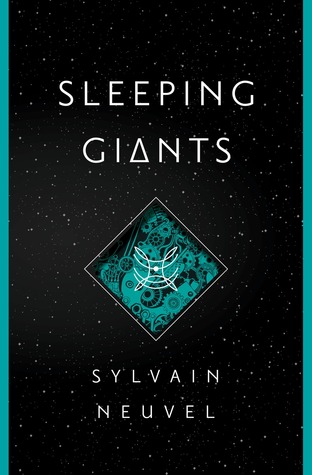 Sleeping Giantsby Sylvain Neuvel
 The Buntline Specialby Mike Resnick
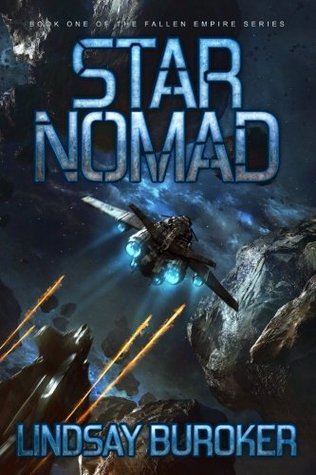 Star Nomadby Lindsay Buroker
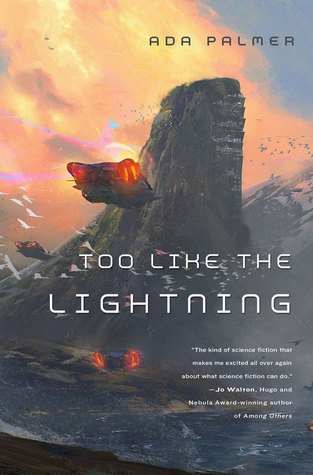 Too Like the Lightningby Ada Palmer